
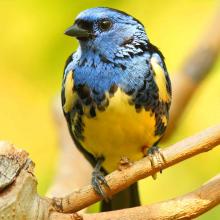
The Turquoise Tanager is a songbird found in the tropical forests of northern South America. Their bright, structurally-coloured blue feathers might seem easy to spot, but they can be surprisingly well camouflaged among sunlit leaves and shadows of the tree canopy.
Their diet consists mainly of fruit, but they also eat insects and other invertebrates, especially during the breeding season when extra protein is needed. They often forage in mixed-species flocks, joining other small birds as they move through the trees. This behaviour may help reduce the risk of predation and improve foraging success.
Turquoise Tanagers are generally social and active, though not as noisy as some other tropical birds. They communicate with soft calls while moving through the canopy.
Breeding behaviour in this species is less well documented than in many temperate birds, but like most tanagers, they build small cup-shaped nests in trees or dense vegetation. The female typically lays two to three eggs, and both parents are believed to help care for the young. Chicks hatch helpless and remain in the nest until they are ready to fledge.
The Turquoise Tanager is currently listed as Least Concern on the IUCN Red List due to its wide range and relatively stable population. However, like many tropical forest species, it faces ongoing threats from deforestation and habitat fragmentation. Its continued survival depends on the protection of large areas of healthy forest habitat.