
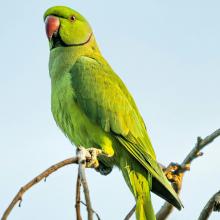
The Rose-ringed Parakeet, also known as the Indian Ringneck, is a medium-sized parrot with a long tail and bright green feathers. This is one of the only parrot species where males and females are noticeably different from each other. Males have a black and purple ring around their neck. The ring develops as they mature, while females and juveniles lack this ring.
Rose-ringed Parakeets are highly adaptable and intelligent birds, found in a wide range of habitats from natural woodlands and savannahs to farmland and busy cities. This makes them adaptable to human disturbance and their population is rising in some parts of their range. In many parts of the world escaped or released birds have established thriving local populations.
Their diet is varied and includes seeds, fruits, nuts, blossoms, and cultivated crops. They are flexible foragers, feeding both in trees and on the ground. In agricultural areas, they can sometimes be considered pests due to their tendency to feed on fruit orchards and grain crops.
Socially, Rose-ringed Parakeets are usually found in pairs or flocks, with near-constant communication between members of the flock. They travel in large groups between feeding areas and communal roosting sites.
Rose-ringed Parakeets nest in tree cavities, as well as holes in cliffs or buildings in urban environments. The female lays 3 to 5 white eggs, which she incubates for about 22–24 days while the male provides food. Chicks fledge after approximately 6 to 7 weeks and may remain with their parents for some time as they learn to forage and navigate their environment.
The Rose-ringed Parakeet is listed as Least Concern on the IUCN Red List due to its large and increasing global population. Its success is largely due to its flexibility in habitat and diet. However, in some areas it poses ecological challenges as an introduced species, competing with native birds for nesting sites and food. Despite this, it remains one of the most widespread and resilient parrot species in the world.